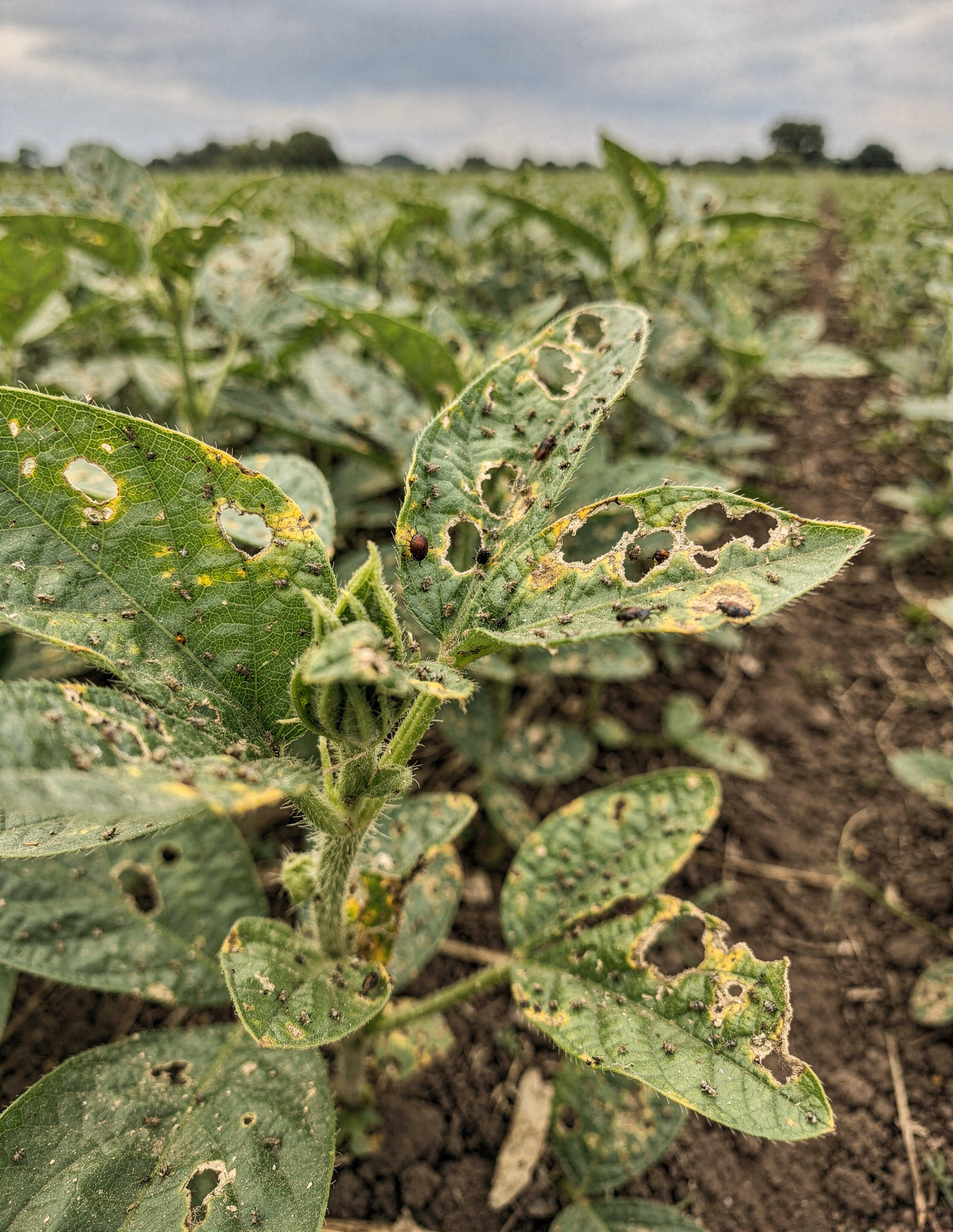
A few holes in your leaves may not look like a big problem. But when pest damage goes unnoticed, it can affect flowering, pod formation and the final harvest.
For farmers growing soybeans and cowpea, checking your farm regularly can help you spot warning signs early and take the right action before the damage gets worse.
Here are five pest warning signs every Nigerian legume farmer should know.
1. Holes and Chewed Leaves
Have you noticed small holes, rough edges or leaves that look as if something has been eating them?
Chewing insects, including caterpillars and beetles, may be responsible. Some pests feed on the edges of leaves, while others leave holes across the leaf surface.
What to look out for
- Fresh holes appearing on young or mature leaves.
- Leaves with irregular edges or missing sections.
- Caterpillars, beetles or insect droppings around damaged leaves.
What should you do?
Check both sides of the leaves and inspect nearby plants for insects. A few holes do not always mean serious damage, but increasing damage across the farm deserves attention.
2. Leaves That Curl, Turn Yellow or Look Distorted
Not all pest damage comes with visible holes. Some insects feed by sucking sap from plant tissues, causing leaves to curl, wrinkle, turn yellow or become stunted.
Aphids and whiteflies are examples of pests that can cause this type of damage. Some also spread plant diseases.
What to look out for
- Leaves curling inward or becoming distorted.
- Yellow patches or unusual discolouration.
- Small insects clustered around young shoots or the undersides of leaves.
- Plants that appear weaker than others growing nearby.
What should you do?
Inspect affected leaves closely and compare them with healthy plants. Remember that nutrient deficiencies, water stress and diseases can cause similar symptoms, so do not assume every yellow or curled leaf is a pest problem.
3. Damaged Flowers and Falling Buds
Your cowpea plants may look healthy, but what happens when they begin flowering?
Pests that attack flowers can interfere with the crop’s ability to develop pods. Thrips and some flower-feeding insects can damage delicate plant tissues, while other factors, such as heat and moisture stress, can also cause flowers to drop.
What to look out for
- Flowers with brown or damaged parts.
- Flowers dropping before pods begin to form.
- Small insects around flower buds and open flowers.
- Fewer developing pods than you would expect from the number of flowers.
What should you do?
Pay closer attention to your plants during flowering. Inspect the flowers for insects and damage, and check whether weather conditions or moisture stress could also be contributing to flower loss.
4. Holes in Pods and Damaged Seeds
When pods begin to form, your crop is entering an important stage. Unfortunately, some pests target the pods themselves.
The legume pod borer, for example, can attack cowpea flowers and pods. Its larvae may bore into pods and feed on developing seeds, reducing the quality and quantity of the harvest.
What to look out for
- Small holes on pods.
- Insect droppings around pod openings.
- Damaged, shrivelled or missing seeds inside affected pods.
- Caterpillars hiding among flowers and pods.
What should you do?
Inspect pods regularly, especially during pod formation. If you find holes, examine the affected pods and nearby flowers for larvae or other signs of insect activity.
Do not wait until many pods show damage before investigating the problem.
5. Empty Pods, Poor Seed Development and Reduced Harvest
One of the most frustrating experiences for a farmer is harvesting a crop that looked promising, only to discover that many pods contain few seeds or none at all.
Pest damage during flowering and pod development can contribute to poor seed formation. However, empty pods and poorly filled seeds can also result from inadequate pollination, water stress, poor nutrition and other growing conditions.
What to look out for
- Pods that contain fewer seeds than expected.
- Seeds that are small, shrivelled or visibly damaged.
- A high number of poorly developed pods.
- Signs of earlier insect damage on flowers and pods.
What should you do?
Open a few affected pods and inspect the seeds. Look for feeding damage, holes or insect remains, and compare them with healthy pods. Identifying the likely cause will help you decide on the appropriate next step.
Don’t Wait Until the Damage Spreads
The earlier you notice unusual changes in your crop, the sooner you can investigate the problem.
Make regular farm inspections part of your routine, especially during vegetative growth, flowering and pod formation.
When you notice something unusual
- Inspect: Check the affected leaves, stems, flowers and pods.
- Identify: Look for insects, feeding marks and other symptoms.
- Act: Seek reliable advice before choosing a control method.
Remember, similar symptoms can have different causes. Correct identification matters because the right response depends on the pest and the stage of crop development.
Conclusion
Pest damage often starts small, a few chewed leaves, curled shoots or flowers dropping too early. Left unchecked, these warning signs can lead to damaged pods, poor seed development and reduced yields. Inspect your farm regularly from vegetative growth through flowering and pod formation. Spot the signs early, identify the pest before taking action, and seek reliable advice when in doubt. Early detection can make all the difference to your cowpea and bean harvest. Download FarmPropa on Android or iOS for product recommendations and good agronomic practices. Follow our social media pages for more practical crop protection tips.
Leave a Reply