Category: blog

  • From Planting to Profit: How to Get More from Your Soybean Farm

    From Planting to Profit: How to Get More from Your Soybean Farm

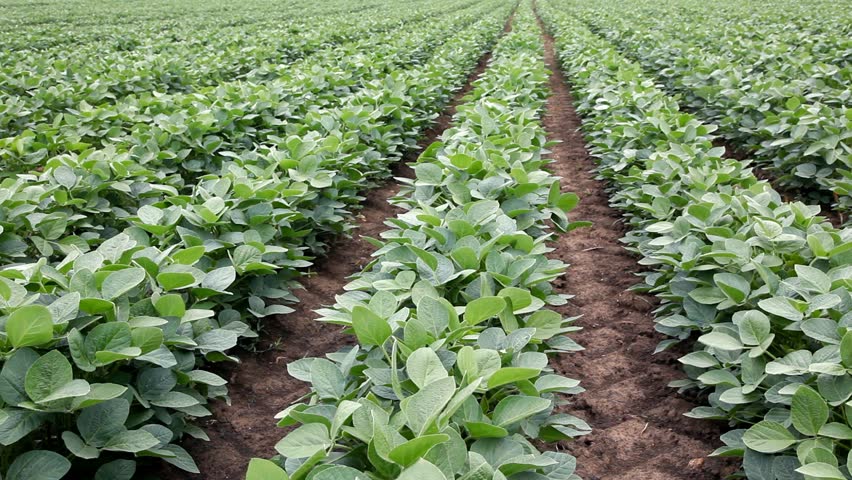
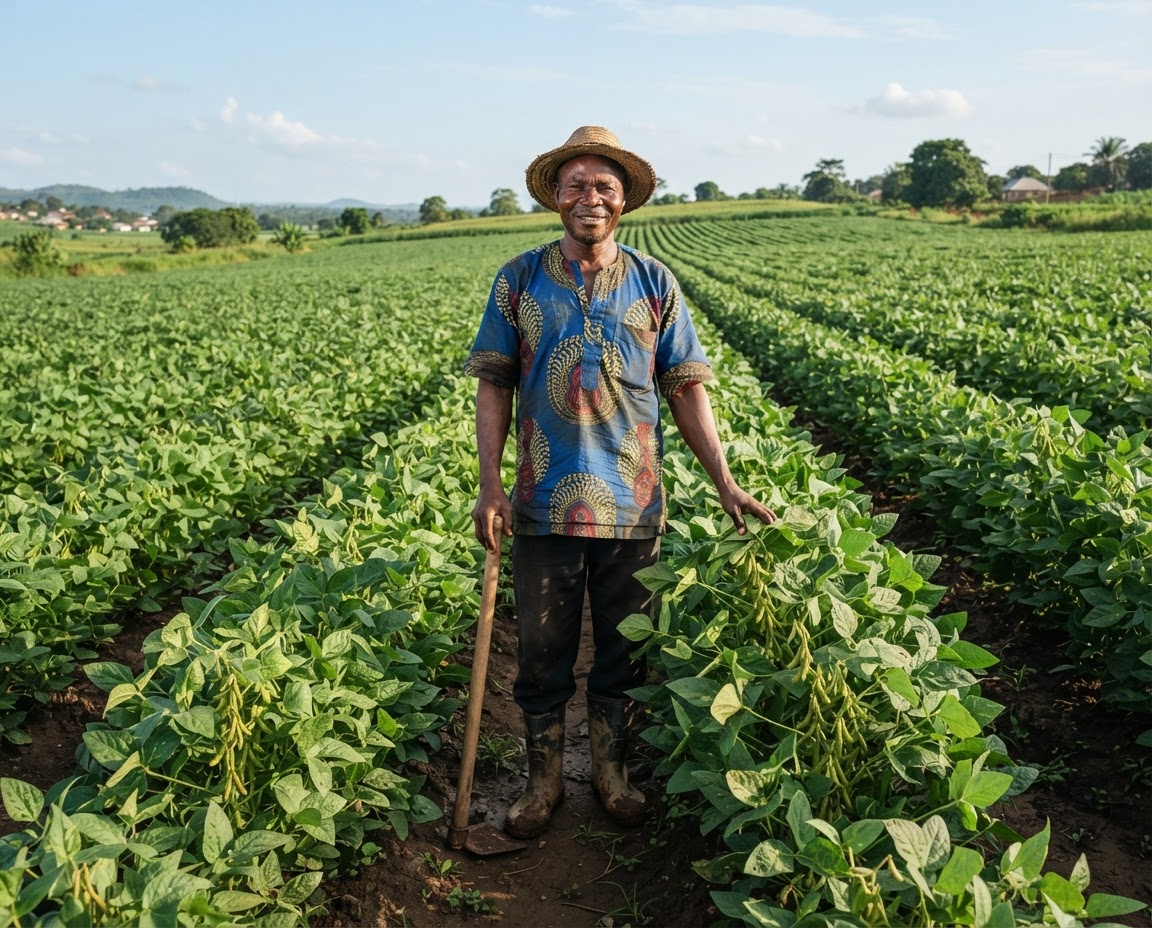
    Soybean is more than just another crop to put in the ground. With strong demand for food, animal feed and other uses, it can be a valuable source of income for farmers.

    But getting more from soybean farming is not simply about planting more acres. Your returns can depend on the decisions you make before planting, during crop establishment, throughout the growing season and even before harvest.

    So, how do you move from simply planting soybean to producing a harvest that gives you better returns?

    Here are some important things to consider.

    1. Start With the Right Soybean Variety

    The variety you plant can make a big difference to your harvest.

    Before choosing your seed, consider your location, maturity period, yield potential and the characteristics that matter most to your farm.

    SC-SL01

    If you are looking for an early-maturing soybean variety with large seeds, good yield potential, high protein content and high pod clearance for mechanised farming, SC-SL01 is worth considering.

    It matures in about 90 days and has an average yield potential of 3–3.5 tons per hectare.

    It is recommended for the Derived Savanna, Guinea Savanna, Sudan Savanna and Sahel Savanna ecologies.

    SC-Signal

    SC-Signal is another early-maturing option, taking about 90 days to maturity. It offers good yield potential, high haulm yield and tolerance to rust, while its high pod clearance makes it suitable for mechanised farming.

    It is recommended for the Northern and Southern Guinea Savanna, Derived Savanna, Sudan Savanna and Sahel Savanna.

    The lesson is simple: don’t just ask, “Which soybean seed can I get?”

    Ask, “Which variety is suited to my farm and what I want to achieve?”

    Choosing the right variety is one of the first steps towards getting more from your soybean farm.

    2. Prepare Your Land Properly

    Good soybean production starts before the seed goes into the soil.

    Prepare your land properly and give the crop a clean environment to establish. A poorly prepared field can create problems with weed competition, uneven crop establishment and other challenges that may affect your final yield.

    Good land preparation is an investment in the crop you are about to plant.

    3. Plant at the Right Time and Spacing

    Soybean needs the right conditions to establish properly.

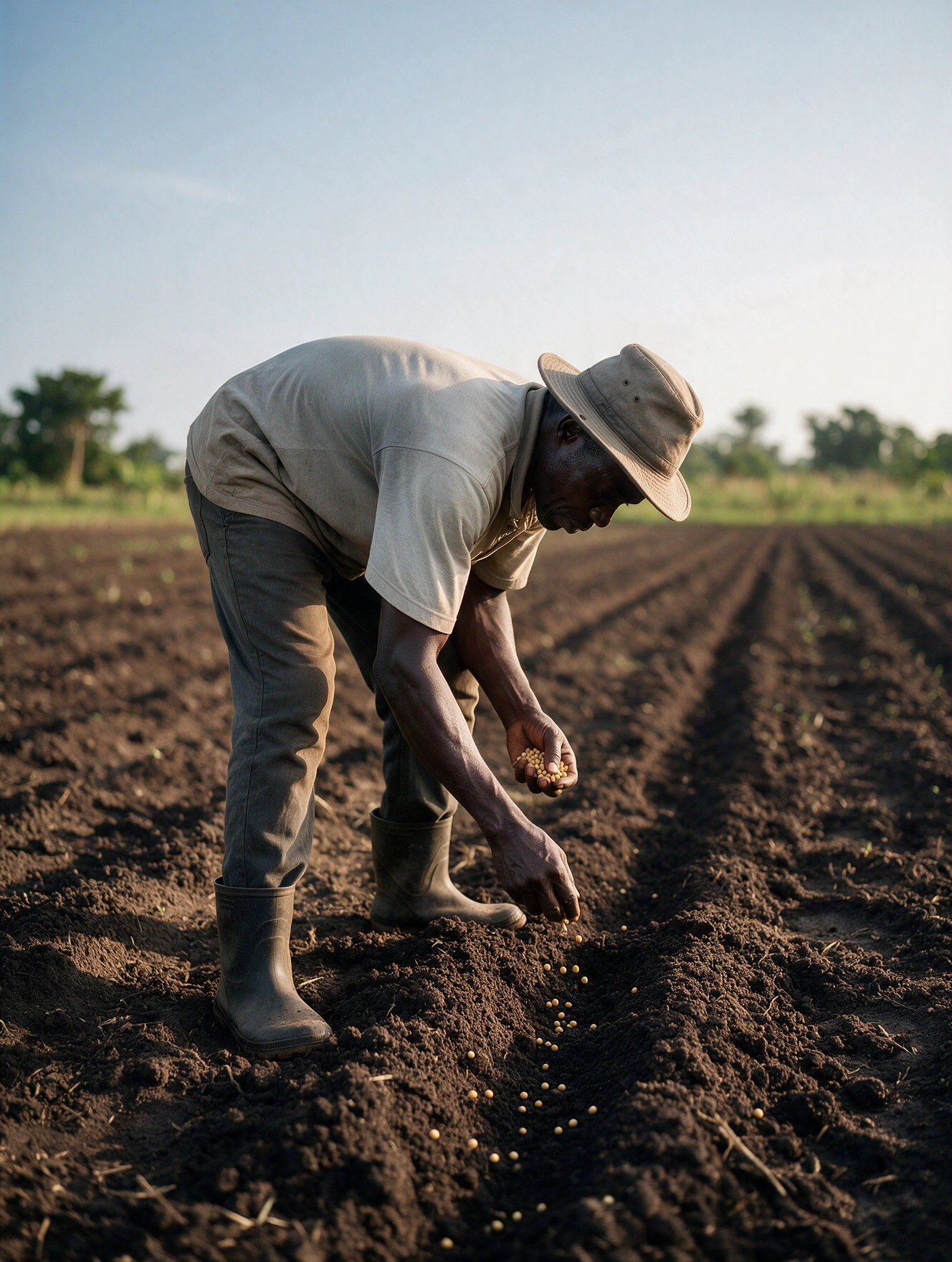
    Plant according to the recommended spacing and depth for your chosen variety, and make sure you are working within the appropriate planting window for your location.

    Good establishment gives your crop a better start and helps create a more uniform field.

    4. Give Your Soybean the Right Start

    Seed quality is important, but so is what happens after planting.

    Pay attention to soil fertility and follow the recommended agronomic practices for your variety and location. Seed treatment with the appropriate inoculant can also support soybean production by helping the crop make better use of nitrogen through biological nitrogen fixation.

    Don’t guess your way through the season. Use recommendations suited to your crop, variety and farm conditions.

    5. Don’t Let Weeds Take Your Profit

    Weeds compete with soybean for water, nutrients, light and space.

    The longer weeds are allowed to compete with your crop, the greater the potential impact on crop growth and yield.

    This is why weed management should be planned early. Identify the weeds on your farm, know your crop stage and use the right herbicide at the recommended rate and timing. Use Buster or Triplex for pre-emergence weed control and Twig for post-emergence control.

    If you are unsure about how much herbicide you need, use the herbicide calculator on the FarmPropa app as a guide.

    6. Scout Your Farm Regularly

    Don’t wait until your soybean field is visibly damaged before you start paying attention.

    Walk through your farm regularly. Look at the leaves, stems, flowers and pods. Check for signs of insect pests, diseases, nutrient problems or unusual growth.

    Control insect pests with recommended insecticides such as Kombat or Vanguish, and treat fungal diseases with an effective fungicide like Blue Snow.

    Early detection gives you more time to respond appropriately and can help prevent a small problem from becoming a major loss.

    7. Protect the Crop Through to Harvest

    Getting a good crop established is only part of the job.

    Continue monitoring your soybean throughout flowering, pod development and maturation. Where crop protection is needed, use the appropriate product according to its label and recommended use.

    Remember: applying more product does not automatically mean better protection. The right product, rate and timing matter.

    8. Think About Profit Before You Harvest

    A profitable soybean farm is not created at harvest. It starts with planning.

    Before you plant, think about your expected costs, yield target, available market and likely selling price.

    Know what you are spending on land preparation, seed, fertiliser, crop protection, labour and harvesting. This helps you understand what your crop needs to produce for the farm to make a worthwhile return.

    The goal is not simply to harvest soybean.

    The goal is to produce a good harvest and turn it into a good business.

    Conclusion: Don’t Just Plant. Plant for Profit.

    Soybean can be a profitable crop, but good returns don’t happen by accident.

    It starts with choosing a variety suited to your farm, preparing your land properly, planting correctly, managing weeds and pests on time, monitoring your crop and planning for the market before harvest.

    Every decision you make can affect what eventually comes out of your field.

    So don’t just plant soybean.

    Plan for a good harvest.

    Plan for a better return.

    Plan to farm smarter.

    Get more good agronomic practices, the right products and the right information, Download the FarmPropa (Available on Android and iOS) Follow our social media platforms to get more from this season.
  • Don’t Spray Too Early or Too Late — How to Know When Your Cowpea/Soybean Is Ready for Weed Control

    Don’t Spray Too Early or Too Late — How to Know When Your Cowpea/Soybean Is Ready for Weed Control

    Weeds don’t wait for your crop to grow before they start competing.

    Once cowpea or soybean emerges, weeds can quickly begin competing with the crop for water, nutrients, sunlight and space. But when it comes to weed control, timing matters.

    Spray too early, and you may not get the result you expect. Spray too late, and weeds may already be well established and competing aggressively with your crop.

    So, how do you know when your cowpea or soybean is ready for weed control?

    Start With the Crop Stage

    The first thing to consider is the growth stage of your crop.

    After emergence, cowpea and soybean gradually develop more leaves and establish their canopy. During this early growth period, weeds can compete strongly with the young crop.

    However, not every herbicide can be applied at every crop stage. Some products are designed for use before the crop emerges, while others are suitable for application after emergence.

    This is why farmers should always check the product label for the recommended crop stage before spraying.

    Why Spraying Too Early Can Be a Problem

    Spraying too early can mean applying a product outside its recommended timing or before the weeds and crop are at the appropriate stage.

    Depending on the herbicide, this may reduce effectiveness or increase the risk of crop injury.

    For post-emergence herbicides especially, application timing is important because the product may be designed to work best when weeds are actively growing and still at a susceptible stage.

    Earlier is not always better.

    Always follow the manufacturer’s recommended timing.

    Why Spraying Too Late Can Also Cost You

    Waiting too long can give weeds time to become larger and more established.

    By then, they may have already taken up valuable water and nutrients and blocked sunlight from reaching your crop.

    Large or mature weeds can also be more difficult to control with some herbicides.

    This is why farmers should not wait until the field looks completely overgrown before thinking about weed management.

    The goal is timely control, not simply late rescue.

    Look at the Weeds

    The condition of the weeds is another important clue.

    Walk through your field and check whether weeds are:

    • Newly emerged and actively growing.
    • Small and at an early growth stage.
    • Becoming established and spreading quickly.
    • Already large, mature or producing seeds.

    Many weed-control products work best when susceptible weeds are still young and actively growing, but the exact timing depends on the herbicide being used.

    Always use the specific product’s label recommendation as your guide.

    What About Cowpea?

    Cowpea can be particularly vulnerable to weed competition during its early development.

    Farmers should monitor the field regularly after emergence and avoid allowing weeds to establish unchecked.

    If you are considering herbicide application, confirm that the product is specifically recommended for cowpea and check its instructions for the correct crop and weed stages.

    Never assume that a herbicide suitable for another crop is automatically safe for cowpea. Saro Agrosciences offers Buster as a pre-emergence option and Twig as a post-emergence option for cowpea.

    What About Soybean?

    Soybean also needs good weed management, particularly while the crop is establishing.

    As with cowpea, the appropriate weed-control timing depends on the herbicide, the weed species, the crop stage and whether the product is intended for pre-emergence or post-emergence use.

    Regular scouting helps farmers identify problems early and make decisions before weeds become difficult to manage. For soybean, Triplex and Buster work as pre-emergence options, while Twig serves as a post-emergence option.

    Before You Spray, Check These Five Things

    Before reaching for your knapsack sprayer, ask yourself:

    1. What stage is my crop? Know whether your cowpea or soybean is at the crop stage recommended for the product.
    2. What weeds are present? Identify the weeds and check their growth stage.
    3. Is this herbicide recommended for my crop? Never spray a product simply because it worked on another farm or another crop.
    4. Am I using the correct rate? More product does not mean better control. Follow the recommended dosage.
    5. Are the weather and field conditions suitable? Wind, rainfall and other conditions can affect herbicide application and performance. Follow the product label for application conditions.

    Conclusion

    Successful weed control is not about being the first farmer to spray or the farmer who sprays the most. It is about getting the timing right.

    Don’t spray too early just because you see the first few weeds. And don’t wait until weeds have taken over your cowpea or soybean field.

    Scout your farm. Know your crop stage. Identify your weeds. Choose the right product, and follow the recommended timing and rate.

    Don’t spray too early. Don’t spray too late. Spray at the right time.

    For more information on good agronomic practices:

    Download the FarmPropa App, available on Android and iOS, speak with a trusted SARO agro-dealer, or follow SARO Agrosciences on Facebook, X (Twitter), LinkedIn and Instagram for more practical farming tips.

  • Fungal Diseases Can Cut Your Harvest: Protect Your Crops This Season

    Fungal Diseases Can Cut Your Harvest: Protect Your Crops This Season

    A healthy crop can look promising today and still suffer serious losses tomorrow.

    One of the major threats farmers face during the growing season is fungal disease. When conditions are favourable, fungi can spread quickly across a field, damaging leaves, stems, flowers, fruits and grains, and reducing both the quality and quantity of your harvest.

    The good news? Early detection and proper crop management can help you stay ahead.

    What Causes Fungal Diseases?

    Fungal diseases thrive when the right conditions come together. Excess moisture, prolonged rainfall, poor air circulation, overcrowded crops and infected plant materials can all increase the risk of disease.

    Some common signs to watch for include:

    • Brown, black or yellow spots on leaves
    • White, grey or powdery growth on plant surfaces
    • Wilting or rotting of plant parts
    • Lesions on stems and leaves
    • Premature leaf drop
    • Poor fruit or grain development
    • Discolouration of harvested produce

    Once a fungal disease becomes established, it can spread from one plant to another through rain splash, wind, irrigation water, farm tools and infected crop residues.

    That is why waiting until the disease becomes severe can cost you valuable yield.

    Crops Are Most at Risk When Conditions Are Wet

    During periods of frequent rainfall and high humidity, farmers need to pay closer attention to their fields.

    Moisture that remains on leaves for long periods creates favourable conditions for many fungal pathogens. Dense crop canopies can make the problem worse because they reduce air movement and slow drying.

    Don’t just watch your crops grow, inspect them regularly.

    Walk through your farm and check both the upper and lower surfaces of leaves, especially areas where moisture tends to remain.

    How Can You Protect Your Crops?

    1. Start With Good Farm Hygiene

    Remove or properly manage infected crop residues after harvest. Leaving heavily infected plant material in the field can allow disease-causing organisms to survive and affect the next crop.

    Also, avoid moving contaminated soil, plant material or farm tools from an infected area to a healthy one.

    2. Give Your Crops Enough Space

    Overcrowded crops create a humid environment within the canopy.

    Follow the recommended spacing for your crop to improve air circulation and allow leaves to dry faster after rainfall.

    3. Avoid Unnecessary Wetness

    Where irrigation is used, avoid practices that keep foliage unnecessarily wet for long periods. Good field drainage is also important, particularly in areas prone to waterlogging.

    4. Scout Your Farm Regularly

    Don’t wait until you see widespread disease.

    Make crop inspection part of your routine. Early signs such as small leaf spots, unusual discolouration or lesions can help you identify a developing problem before it spreads throughout the field.

    5. Use Crop Protection Products Correctly

    Where a fungal disease has been identified and fungicide treatment is recommended, use a registered product appropriate for the crop and disease, and always follow the label for the correct dose, timing and application method.

    For farmers using SARO crop protection solutions, products such as Blue Snow can be part of a well-managed crop protection programme where appropriate. Always confirm the product label and recommended use for your particular crop and disease before application.

    Remember: More product does not mean better protection. Applying above the recommended rate can increase costs and may create other crop protection problems.

    Protecting Your Harvest Starts Before Disease Appears

    Good disease management is not just about spraying.

    It is about combining healthy planting materials, proper spacing, field sanitation, good nutrition, regular scouting, proper water management and timely crop protection.

    And when disease pressure is high, don’t wait until your crop is already badly affected before taking action.

    Your harvest represents months of work, money and effort. Protect it by paying attention to your crop throughout the season.

    Don’t Let Fungal Disease Take Your Yield

    A disease-free-looking field today is not a guarantee of a disease-free harvest tomorrow.

    Scout early. Act early. Farm smart. Protect your yield.

    Need guidance on agronomic practices? Download the FarmPropa App, available on Android and iOS, speak with a trusted SARO agro-dealer, or follow SARO Agrosciences on social media more practical farming tips and updates.

  • Cash Crops With Big Potential for Nigerian Farmers

    Cash Crops With Big Potential for Nigerian Farmers

    Farming is more than putting seeds in the soil. For many Nigerian farmers, it is a business, a source of income, and an opportunity to build something that lasts.

    With the right crop, good agronomic practices, access to markets, and proper planning, farmers can improve their earning potential and build more profitable farm enterprises.

    So, if you’re already farming or thinking about what to plant next, here are some cash crops worth paying attention to.

    1. Rice

    Rice remains one of Nigeria’s most important food crops, with strong demand across the country.

    From smallholder farms to commercial operations, rice production presents opportunities for farmers, especially in areas with suitable soil, water availability, and access to markets.

    Farmers looking to get better returns should pay attention to choosing suitable varieties, proper land preparation, good water management, weed control, and timely harvesting.

    2. Maize

    Maize is one of the crops Nigerians use every day, whether for food, livestock feed or industrial purposes.

    Its relatively short production cycle and strong demand make it an attractive crop for farmers. However, profitability depends greatly on yield, input management and market prices.

    Using quality seeds and following recommended planting, fertiliser, pest and weed management practices can help farmers get more from every field.

    3. Soybean

    Soybean is becoming increasingly important in Nigeria because of its value as both a food and industrial crop.

    It is used in animal feed, food processing and other industries, creating opportunities beyond the farm gate.

    For farmers considering soybean, good seed selection, appropriate planting time, effective weed management and proper harvesting are important for achieving good yields and quality.

    4. Sesame

    Sesame is another crop with strong commercial potential.

    Its relatively high value and demand in local and international markets make it an interesting option for farmers who have access to suitable land and reliable buyers.

    However, farmers should consider market access before planting on a large scale. Knowing who will buy the produce, the expected quality requirements and prevailing prices can make a significant difference.

    5. Cocoa

    Cocoa remains one of Nigeria’s major agricultural commodities and has long-term income potential for farmers.

    Unlike some annual crops, cocoa is a long-term investment. Establishing a productive cocoa farm requires patience, good planting materials, proper spacing, weed management, pest and disease control, and consistent farm maintenance.

    For farmers willing to invest for the long term, cocoa can become a valuable source of income.

    6. Cassava

    Cassava is widely grown across Nigeria and has a strong market because it can be processed into several products.

    Beyond fresh roots, cassava can be processed into garri, flour, starch and other products, creating opportunities across the value chain.

    This makes cassava particularly interesting for farmers who are close to processors or markets where their harvest can be sold or processed at better value.

    7. Pepper

    Pepper is another crop with strong demand in Nigerian households and markets.

    With good production practices and access to a reliable market, pepper farming can provide attractive returns. Farmers should, however, pay close attention to pest and disease management, water availability and post-harvest handling.

    Choosing the Right Cash Crop

    A crop being profitable for one farmer does not automatically mean it will be profitable for another.

    Before planting, consider:

    • Market demand: Who will buy your produce?
    • Location: Is your land suitable for the crop?
    • Production costs: Can you manage the cost of seed, fertiliser, crop protection, labour and other inputs?
    • Yield potential: What can you realistically harvest per hectare?
    • Market access: How far is the nearest buyer, processor or market?
    • Post-harvest losses: How will you store, transport or process your harvest?
    • Timing: When is the best period to plant and when will your produce reach the market?

    The Bottom Line

    Nigeria’s agricultural sector has opportunities across many crops, but profitable farming requires more than choosing a crop with a good market price.

    The real opportunity is in combining the right crop with the right practices, the right inputs and the right market strategy.

    Whether you are growing rice, maize, soybean, sesame, cocoa, cassava or pepper, every decision, from seed selection to weed and pest management,can affect your final yield and returns.

    Planning your next planting season? Start with the crop, understand the market, and farm with purpose.

    Follow Saro Agrosciences across all social media channels for more farming tips, product updates and market insights.Download the FarmPropa app today  available on Android and iOS  for expert farming guidance right on your phone.

  • Root Rot, Blast Disease & Leaf Blight: A Farmer’s Guide to Spotting and Stopping Fungal Threats Early

    Root Rot, Blast Disease & Leaf Blight: A Farmer’s Guide to Spotting and Stopping Fungal Threats Early

    Fungal diseases are among the biggest threats to crop production. They often begin with subtle symptoms, but if left unchecked, they can spread rapidly, reducing crop vigor, lowering yields, and affecting the quality of your harvest.

    Knowing what to look for and acting early can make all the difference.

    Root Rot

    Root rot is a fungal disease that attacks a plant’s root system, making it difficult for the crop to absorb water and nutrients.

    How to spot it

    • Yellowing leaves
    • Wilting even when the soil is moist
    • Stunted growth
    • Brown or black, decaying roots
    • Plants that die prematurely

    Crops commonly affected

    Maize, soybeans and other legumes, tomatoes, potatoes, and many vegetables.

    How to reduce the risk

    Plant in well-drained soils, avoid overwatering, practice crop rotation, and use healthy planting materials. Since root rot develops beneath the soil, regular field inspection is essential for early detection.

    Blast Disease

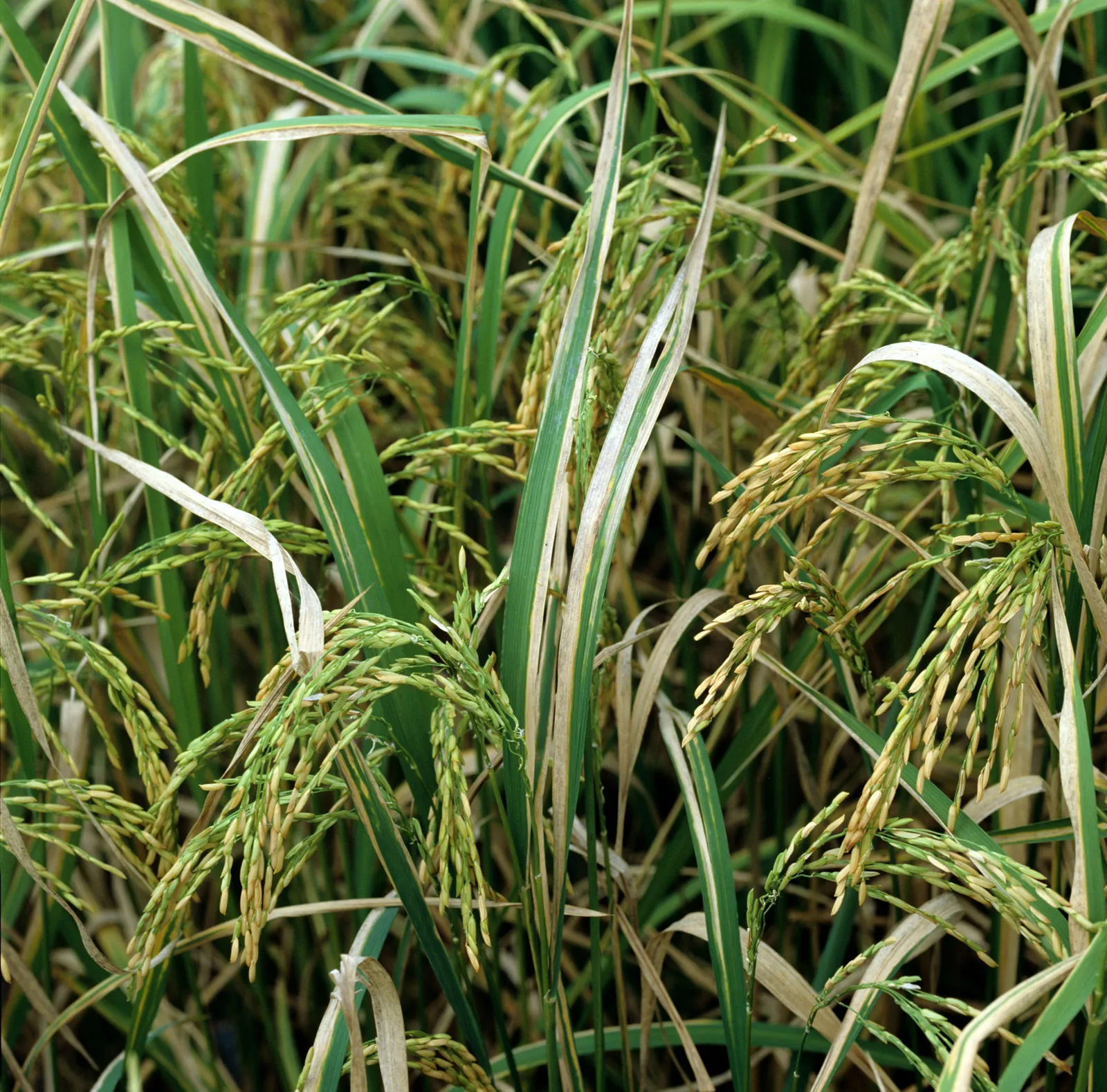
    Blast disease is one of the most destructive fungal diseases affecting rice. Under warm and humid conditions, it can spread quickly across the field.

    How to spot it

    • Diamond-shaped spots on leaves with grey or whitish centers
    • Brown lesions on leaves
    • Drying leaves
    • Poor grain filling due to infected panicles

    Crops commonly affected

    Rice (primarily) and other cereal crops.

    How to protect your crop

    Early intervention is key. At the first signs of blast or preferably before disease pressure becomes severe, apply a recommended systemic fungicide such as Blue Snow, which provides preventive and curative control of a wide range of fungal diseases in rice, helping farmers protect their fields before significant damage occurs.

    Leaf Blight

    Leaf blight attacks the leaves of crops, reducing their ability to produce food through photosynthesis. If ignored, it can weaken the entire plant and reduce yield.

    How to spot it

    • Brown or yellow lesions on leaves
    • Drying leaf tips
    • Large dead patches on leaves
    • Premature leaf death

    Crops commonly affected

    Maize, rice, tomatoes, potatoes, and other vegetables.

    How to protect your crop

    Maintain proper plant spacing, remove infected crop residues, and monitor your field regularly. Where fungal leaf diseases are present or expected, timely application of a broad-spectrum fungicide like Blue Snow can help limit disease spread and keep leaves healthy for longer. For best results, apply before fungal attack or at the onset of infestation, following the recommended label directions.

    Early Action Saves Your Harvest

    The longer fungal diseases remain unnoticed, the harder they become to manage. Make it a habit to inspect your fields regularly, especially during periods of high humidity or frequent rainfall.

    Good agronomic practices, combined with timely crop protection, can significantly reduce losses and improve harvest quality. Healthy crops don’t happen by chance; they’re protected through early detection, informed decisions, and the right solutions at the right time.

    Want more guidance tailored to your farm? Download FarmPropa (available on Android and iOS) for Good Agronomic Practices for rice and product recommendations to help you make better decisions throughout the season.

  • Upland vs. Lowland Rice Ecologies: Which One Fits Your Farm?

    Upland vs. Lowland Rice Ecologies: Which One Fits Your Farm?

    If you’ve ever grown rice and watched it struggle with poor growth, low yields or disease despite your best efforts, one possible reason is that you planted a variety that wasn’t suited to your farm’s growing conditions.

    A rice variety that thrives in a flooded paddy won’t necessarily perform well in a rain-fed upland field. Before you prepare your land this season, ask yourself one simple question: Is your farm upland or lowland, and are you planting a variety that’s suited to it?

    Upland Rice: Built for Rain-Fed Conditions

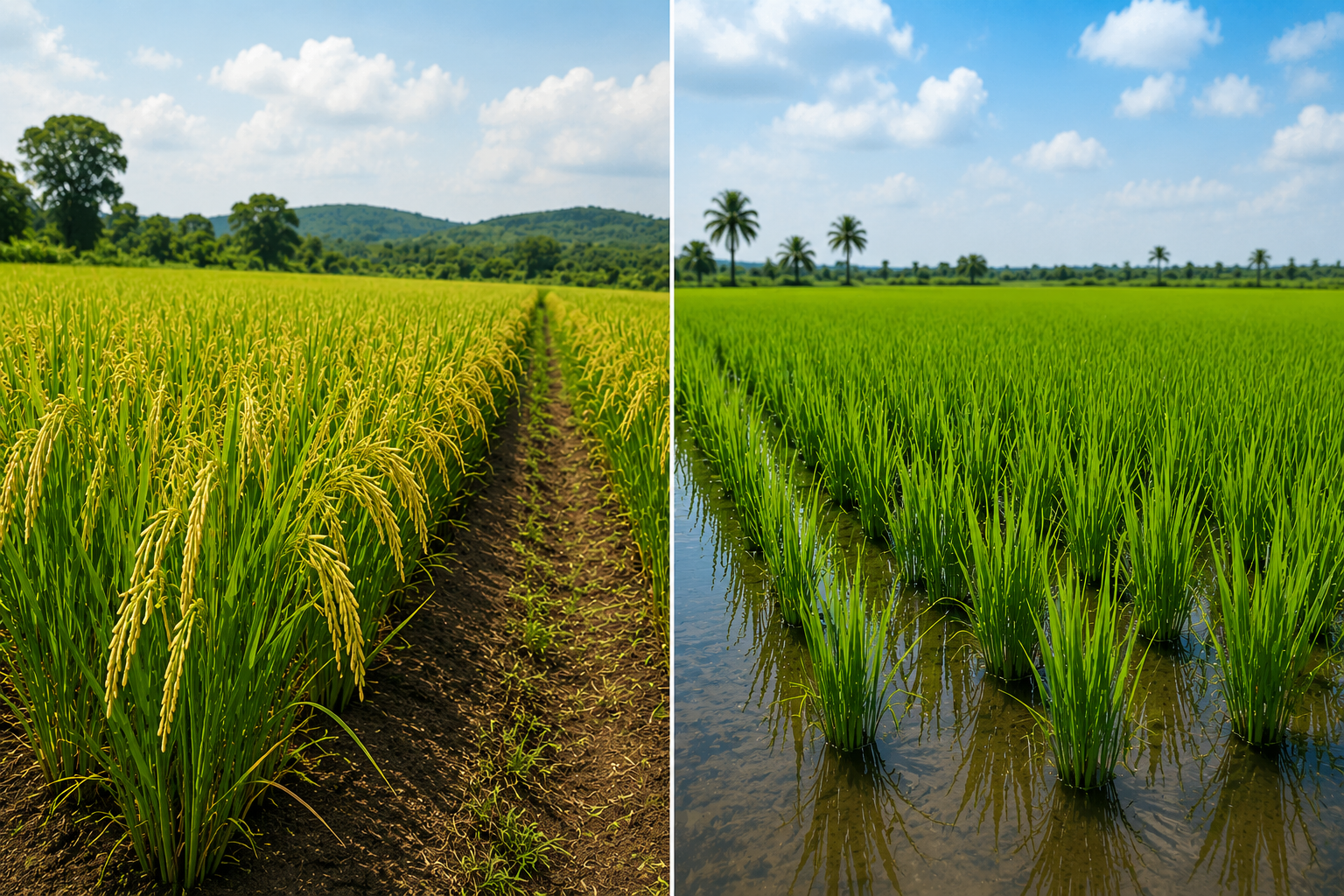
    Upland rice is grown on well-drained soil without standing water. It depends entirely on rainfall rather than flooding, which makes it the dominant system across much of the North West and North East. Kaduna, Gombe, Taraba, Adamawa and Yobe all have large numbers of farmers working upland fields.

    When choosing a variety for upland farming, look for one that’s bred for rain-fed conditions. These varieties are typically:

    • Drought tolerant: Able to withstand short dry spells between rains.
    • Early maturing: Many upland varieties mature faster, reducing the risk of late-season dry spells affecting the crop.
    • Vigorous in early growth: Fast establishment helps the crop compete better against weeds, which are often more aggressive in fields without standing water.

    If your farm depends on rainfall and doesn’t have irrigation or natural flooding, an upland-adapted variety will almost always outperform a lowland variety planted under the same conditions.

    Lowland Rice: Built for Flooded or Paddy Systems                  

    Lowland rice is grown in fields that are flooded or hold standing water for part of the growing season, either through natural flooding, irrigation or paddy systems. This is common in areas with access to rivers, floodplains or irrigation infrastructure.

    If your fields remain flooded or are irrigated for much of the season, choose a variety developed for lowland production. These varieties are generally:

    • Adapted to standing water: Able to grow and perform well in flooded or saturated soils.
    • Responsive to consistent water supply: Stable moisture allows these varieties to express their full yield potential.
    • High yielding under favourable conditions: With reliable water availability, lowland systems often produce higher yields than rain-fed upland systems.

    Planting a lowland variety in a flooded field gives you the full benefit of consistent moisture and nutrient availability; something an upland variety isn’t designed to take full advantage of.

    What About Farmers Who Do Both?

    A significant number of farmers work with both systems, sometimes cultivating upland and lowland rice on the same farm, or switching between them depending on the season and water availability.

    If this is you, the key is simple: match the variety to the specific field, not to your farm as a whole. A field that floods needs a lowland variety. A field that depends entirely on rainfall needs an upland variety. Using the same seed across both will almost always mean one field performs below its potential.

    Why This Decision Matters More Than It Seems

    Choosing the wrong variety for your production system doesn’t just reduce yield, it affects everything that follows:

    • Weed management: Upland fields face heavier weed pressure, making timely weed control and vigorous, early-establishing varieties especially important.
    • Water use: A variety adapted to flooded conditions may not perform to its full potential in a rain-fed upland field where soil moisture is limited.
    • Disease management: Disease pressure differs between upland and lowland systems, so choosing a variety with resistance suited to your production ecology can improve crop performance.
    • Harvest timing: Planting a variety with the wrong maturity period can expose the crop to late-season drought or rainfall, reducing yield and grain quality.

    Getting this right at the start of the season sets the tone for everything else; from land preparation to weed management to the health of your final harvest.

    The Bottom Line

    Before you finalize your seed for this planting season, take stock of your field. Does it flood or hold water naturally? Or does it depend entirely on rainfall? That answer should guide your variety choice, not habit, and not whichever seed is easiest to find.

    Don’t choose your seed simply because it’s popular or readily available. Choose it because it’s the right variety for your field.

    Matching your rice variety to your actual growing system is one of the simplest, lowest-cost decisions you’ll make all season, and one of the ones most likely to pay off by harvest time.

    Want more guidance tailored to your farm? Download FarmPropa (available on Android and iOS) for Good Agronomic Practices for rice and product recommendations to help you make better decisions throughout the season.

  • Don’t Relax Yet: Why June is a Make-or-Break Month for Your Crops

    Don’t Relax Yet: Why June is a Make-or-Break Month for Your Crops

    When June arrives, there’s a sense of relief across many farms. The land has been prepared, planting is done, and the rains have finally settled in. It feels like the hard part is over.

    It is not!

    June is one of the most critical months in the farming calendar. It is the month where weeds grow fastest, pests multiply quietly, and diseases find the perfect conditions to spread. What you do (or fail to do) this month often decides whether your harvest meets your expectations or falls painfully short.

    Why June Matters So Much

    This is the period when your crops are actively growing, putting out new leaves, building root systems, and preparing to flower or set fruit. It is also peak season for rainfall, which means weeds get a free pass to grow as fast as your crops, sometimes faster.

    Left unchecked, weeds compete with your crops for nutrients, water, and sunlight. The result is stunted growth, reduced yields, and a much harder harvest season ahead.

    The Silent Threats to Watch

    1. Weed Competition: Fast-growing weeds can choke out young crops within weeks if not controlled early.
    2. Pest Pressure: Humid conditions create a breeding ground for pests that attack leaves, stems, and root.
    3. Fungal Diseases: Excess moisture encourages fungal growth, which can spread rapidly across a field if not managed.

    What You Should Be Doing Right Now

    1. Stay Ahead of Weeds: Apply reliable herbicides depending on your crop to keep weeds from competing with your crops for nutrients and water.

     2. Scout Your Farm Regularly: Walk through your field at least twice a week to catch early signs of pests or disease before they spread.

    3. Manage Moisture and Drainage: Waterlogged fields are an open invitation to fungal infections, so ensure proper drainage on your farm.

    4. Apply Nutrients on Schedule: Crops growing this fast need consistent feeding. Don’t skip your fertilizer application schedule.

    Conclusion

    June rewards farmers who stay alert and punishes those who relax too early. Neglecting your crop can undo months of hard work. But with the right products, timely interventions, and consistent field monitoring, you can protect your investment and position your crops for a healthy, productive harvest.

    The work doesn’t stop after planting it simply enters a new phase. Stay proactive, stay informed, and give your crops the support they need to thrive.

    For more farming tips, seasonal recommendations, and expert guidance, download the FarmPropa app (Available on Android and iOS) and access valuable resources designed to help you achieve better yields and healthier crops.

  • 4 Cropping Strategies Guaranteed to Increase Your Farm’s Yield (Even on a Small Farm)

    4 Cropping Strategies Guaranteed to Increase Your Farm’s Yield (Even on a Small Farm)

    As a farmer, you want to get the most from your land. But buying more land or expensive inputs may be challenging; however, how you plant and arrange your crops can make a big difference. Using smart cropping strategies can improve your soil, reduce pests, save money, and increase your yield, even if your farm is small.

    In this blog, we’ll look at four cropping strategies that have helped farmers get better results from their land. These are simple to use and can work for almost any type of farm, regardless of size.

    1. Mixed Cropping

    Mixed cropping involves growing two or more crops on the same piece of land at the same time, without any strict row arrangement.

    Why it works:

    • Different crops can complement each other by using nutrients differently, reducing soil depletion.
    • If one crop fails, the other can still grow, meaning you do not always lose everything.

    Pro tip: Choose crops that grow well together and have similar water and sunlight needs, for example, maize and beans.

    2. Intercropping

    Intercropping is similar to mixed cropping, but the crops are planted in planned patterns, usually in rows.

    Why it works:

    • Improves space use and light exposure for all crops.
    • Can help keep pests away naturally, as some crops naturally repel insects that attack others.

    Pro tip: Pair tall crops with short ones and leafy crops with root crops for optimal growth.

    3. Crop Rotation

    Crop rotation is the practice of changing the type of crop grown on a piece of land each season or year.

    Why it works:

    • Reduces the buildup of pests and diseases specific to one crop.
    • Keeps your soil healthy due to the different characteristics of each crop.

    Pro tip: Alternate heavy feeders (e.g., Maize), which use up a lot of soil nutrients due to root type, with nutrient-fixing crops (e.g., Legumes) to naturally replenish what is used up.

    4. Relay Cropping

    Relay cropping means planting a second crop before the first one is fully harvested.

    Why it works:

    • Makes the most of available land and growing seasons.
    • Reduces the time the land sits idle, increasing total yield.

    Pro tip: Choose crops that don’t compete too much for sunlight or nutrients. For example, plant a fast-growing vegetable between rows of a slowly growing crop.

    Bonus Strategy

    Strip Cropping: The practice of planting different crops in strips next to each other on the same land.

    Why it works:

    • Helps stop soil from washing away during heavy rain.
    • Can make harvesting easier because crops are in neat, accessible strips.

    Wrapping up,

    You don’t need a big farm to get good yields. By using these cropping strategies, you can make the most of the land you have, reduce waste, and grow more food. Keep trying different crops and see what works best for your farm. Small changes in how you plant can give big results in the harvest.

    We recommend keeping notes of what you plant each season. Write down what worked well and what didn’t. Over time, you’ll know which strategies give you the best results.

    Want to Learn More? Download the FarmPropa App today to get practical tips, crop guides, and expert advice, available on Android and iOS.

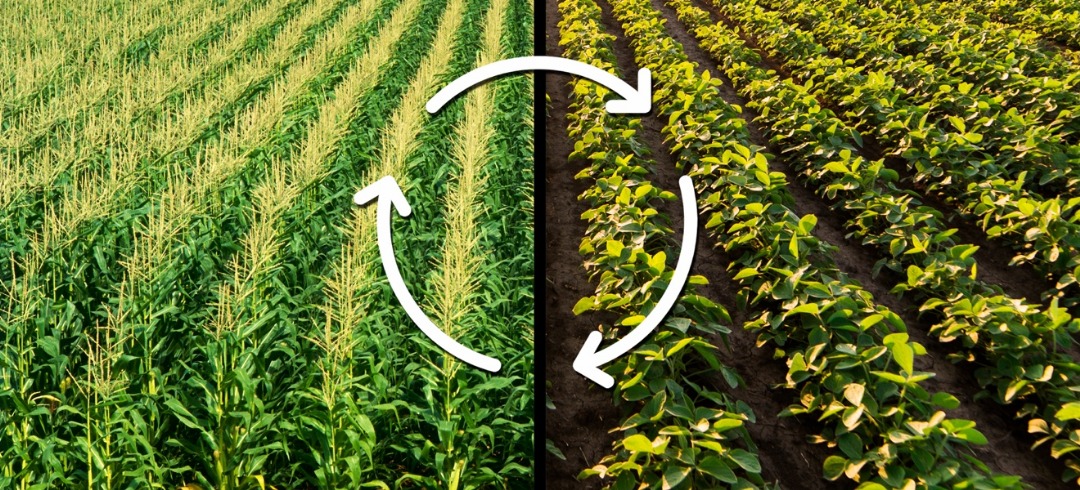
  • How to Achieve Better Harvest with Crop Rotation

    How to Achieve Better Harvest with Crop Rotation

    Modern farming is no longer just about planting, harvesting, and repeating the cycle. The soil itself needs attention, and one of the oldest yet most effective strategies to keep it productive is crop rotation. This practice, when done right, not only improves yield but also results in healthy soil.

    In this week’s blog, we break down how crop rotation improves soil health and why it should form a key part of your farming schedule.

    1. Breaking Pest and Disease Cycles

    When farmers grow the same crop year after year (a practice called monocropping), pests and diseases that attack that crop quickly build up in the soil. For example, if you plant maize continuously, maize stalk borers and soil-borne diseases will increase over time.

    By rotating crops – say, cereals with legumes or tubers, you disrupt the cycle. Many pests and pathogens that thrive on one crop simply can’t survive when another replaces it. This natural break reduces infestations and disease pressure, meaning farmers can spend less on pesticides and enjoy healthier crops.

    2. Natural Soil Fertility Boost

    Different crops draw nutrients differently. Cereals consume lots of nitrogen, tubers like cassava demand potassium, and vegetables have their own nutrient needs. Rotation helps balance this usage so the soil doesn’t get exhausted. For instance, planting maize after soybean or cowpea often results in better yields because the maize benefits from the nitrogen left behind in the soil.

    3. Improving Soil Structure and Organic Matter

    Soil is a living system. Continuous monocropping drains it of organic matter and weakens its structure. Rotation helps restore balance. Deep-rooted crops open up the soil, improving aeration and water infiltration, while crop residues decompose into organic matter that strengthens soil texture and moisture holding capacity.

    4. Preventing Soil Erosion

    Rotating with crops that provide ground cover protects soil from erosion. Their canopy shields the surface from raindrop impact, while their roots hold the soil together, preserving valuable topsoil where nutrients are most concentrated.

    5. Promoting Biodiversity in the Soil

    Healthy soil is alive with organisms, bacteria, fungi, earthworms, and other microfauna. Crop rotation, especially with legumes, introduces different root exudates and organic materials that feed a diverse community of soil organisms. This biodiversity helps suppress harmful pathogens, enhances nutrient cycling, and keeps the soil ecosystem resilient.

    Practical Crop Rotation Ideas

    • Maize–Soybean Rotation: Farmers who rotate maize with soybean often see higher maize yields due to improved nitrogen and reduced disease pressure.
    • Cassava–Groundnut Rotation: Cassava’s high nutrient demands are supported by groundnut’s soil-enriching effect.
    • Rice–Vegetable Rotation: Upland rice rotated with tomatoes, peppers, or leafy vegetables improves soil structure and reduces rice-specific disease cycles.
    • Yam–Cereal Rotation: Alternating yam with cereals helps cut down yam pests and balances nutrient use.
  • Herbicides and Legumes: Do’s and Don’ts Every Farmer Should Know

    Herbicides and Legumes: Do’s and Don’ts Every Farmer Should Know

    Farming legumes like beans, soybeans, or groundnuts is rewarding, but weeds can destroy the effort made; they steal water, sunlight, and nutrients from your crop, leaving you with poor harvests. That’s why using herbicides the right way is very important.

    At Saro Agrosciences, Buster (a pre-emergence herbicide you use after planting but before weeds come up) and Twig (a post-emergence herbicide you use when weeds are already showing). are very effective in helping to protect your legumes at the right time, but only if you apply them correctly.

    Here are the dos and don’ts every farmer should know and adhere to before their next herbicide application on a leguminous farm.

    The Do’s (What You Should Do)

    1. Use the right herbicide at the right stage: Before planting, make sure you clear the field with land-clearing herbicides like Slasher, Slasher Super or Gobara SG. These are non-selective herbicides, which means they kill every plant they touch. That’s why they must be used before planting, if you spray them after, they will wipe out your crop completely.

    Right after planting your legumes, apply Buster quickly to stop weeds from coming up and to keep the field clean from the start. If you miss this early application window, don’t worry. Wait until the weeds show, then use Twig to clear them safely without harming your beans, soybeans, or groundnuts.

    Remember: timing is everything. Using these herbicides at the wrong stage will not only reduce their effect but can also harm your crop. Follow the right order, and your farm will thank you with a better harvest.

    2. Measure and mix correctly: STRICTLY follow the instructions on the label when it comes to dosage. Using the right amount is the only way to get the best results. If you use more than required, you will not get a better outcome; instead, you risk destroying your crops and harming the soil and environment. On the other hand, if you use too little, the weeds will survive, and all your effort and money will be wasted.

    The simple rule is this: don’t guess, don’t underdo, don’t overdo, just follow the instructions on the label.

    3. Spray at the right time of day: Spray in the morning or evening when the sun is not too hot, the wind is calm, and no rain is expected. This helps the herbicide work better and reduces waste.

    The Don’ts (What You Should Avoid)

    1. Don’t mix herbicides carelessly: Unless the label or an expert says it is safe, never combine two different herbicides. Wrong mixtures can destroy your crop or reduce effectiveness. If you must mix, make sure to reach out to us for more details.

    2. Don’t forget to wear PPE while spraying: Always wear boots, gloves, and a face cover. Wash your sprayer, hands, and clothes immediately after spraying. Protecting your health is as important as protecting your crops.

    3. Don’t keep herbicides near food, children, or animals: store them separately in a safe, dry place. Herbicides are dangerous if swallowed or touched.


    In conclusion,

    Herbicides are great. But how you apply them is just as important as the product itself. Want more tips, simple guides, and expert advice on protecting your crops? Download the FarmPropa App today and carry knowledge with you everywhere you go.