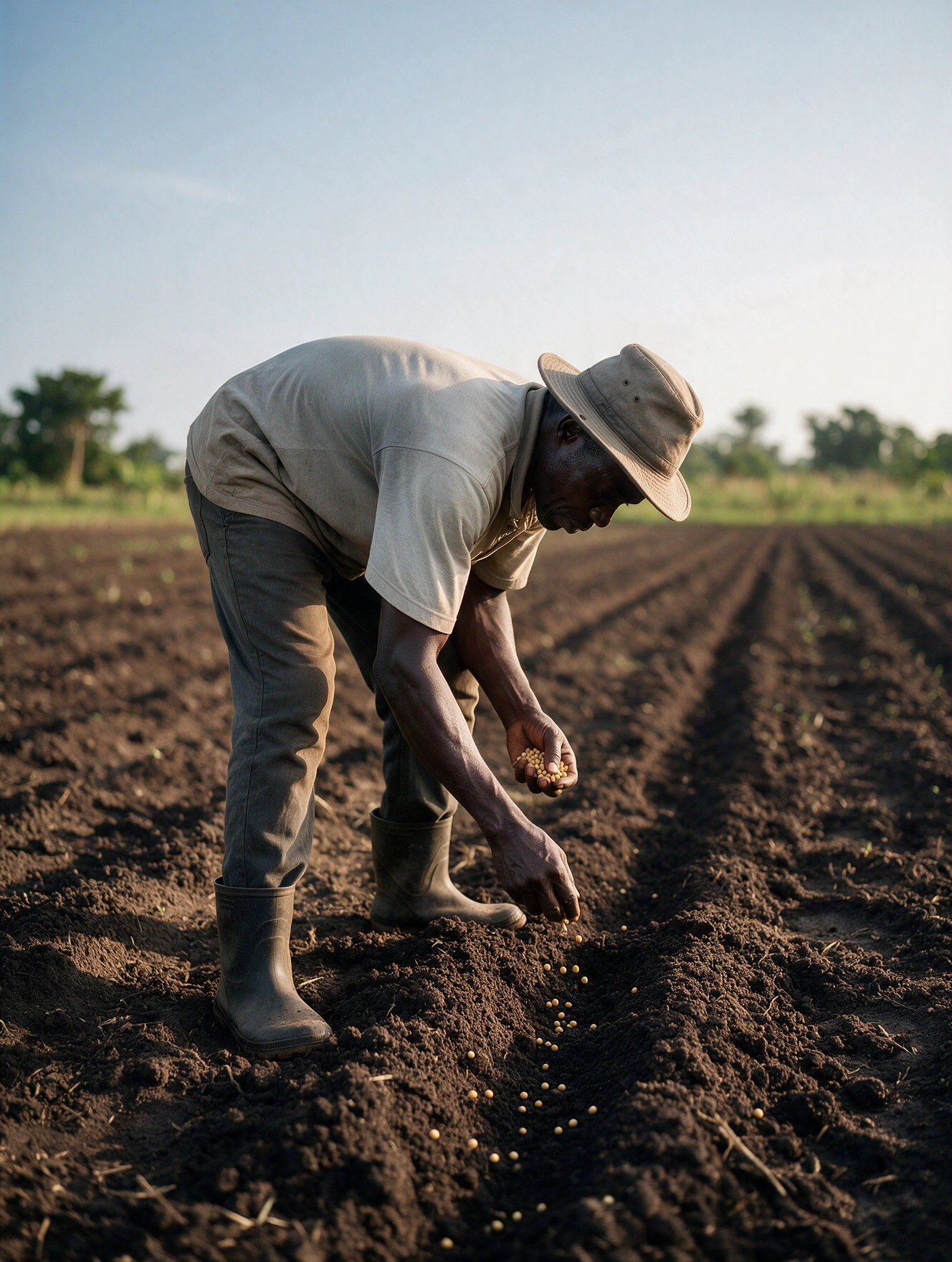
Soybean is more than just another crop to put in the ground. With strong demand for food, animal feed and other uses, it can be a valuable source of income for farmers.
But getting more from soybean farming is not simply about planting more acres. Your returns can depend on the decisions you make before planting, during crop establishment, throughout the growing season and even before harvest.
So, how do you move from simply planting soybean to producing a harvest that gives you better returns?
Here are some important things to consider.
1. Start With the Right Soybean Variety
The variety you plant can make a big difference to your harvest.
Before choosing your seed, consider your location, maturity period, yield potential and the characteristics that matter most to your farm.
SC-SL01
If you are looking for an early-maturing soybean variety with large seeds, good yield potential, high protein content and high pod clearance for mechanised farming, SC-SL01 is worth considering.
It matures in about 90 days and has an average yield potential of 3–3.5 tons per hectare.
It is recommended for the Derived Savanna, Guinea Savanna, Sudan Savanna and Sahel Savanna ecologies.
SC-Signal
SC-Signal is another early-maturing option, taking about 90 days to maturity. It offers good yield potential, high haulm yield and tolerance to rust, while its high pod clearance makes it suitable for mechanised farming.
It is recommended for the Northern and Southern Guinea Savanna, Derived Savanna, Sudan Savanna and Sahel Savanna.
The lesson is simple: don’t just ask, “Which soybean seed can I get?”
Ask, “Which variety is suited to my farm and what I want to achieve?”
Choosing the right variety is one of the first steps towards getting more from your soybean farm.
2. Prepare Your Land Properly
Good soybean production starts before the seed goes into the soil.
Prepare your land properly and give the crop a clean environment to establish. A poorly prepared field can create problems with weed competition, uneven crop establishment and other challenges that may affect your final yield.
Good land preparation is an investment in the crop you are about to plant.
3. Plant at the Right Time and Spacing
Soybean needs the right conditions to establish properly.
Plant according to the recommended spacing and depth for your chosen variety, and make sure you are working within the appropriate planting window for your location.
Good establishment gives your crop a better start and helps create a more uniform field.
4. Give Your Soybean the Right Start
Seed quality is important, but so is what happens after planting.
Pay attention to soil fertility and follow the recommended agronomic practices for your variety and location. Seed treatment with the appropriate inoculant can also support soybean production by helping the crop make better use of nitrogen through biological nitrogen fixation.
Don’t guess your way through the season. Use recommendations suited to your crop, variety and farm conditions.
5. Don’t Let Weeds Take Your Profit
Weeds compete with soybean for water, nutrients, light and space.
The longer weeds are allowed to compete with your crop, the greater the potential impact on crop growth and yield.
This is why weed management should be planned early. Identify the weeds on your farm, know your crop stage and use the right herbicide at the recommended rate and timing. Use Buster or Triplex for pre-emergence weed control and Twig for post-emergence control.
If you are unsure about how much herbicide you need, use the herbicide calculator on the FarmPropa app as a guide.
6. Scout Your Farm Regularly
Don’t wait until your soybean field is visibly damaged before you start paying attention.
Walk through your farm regularly. Look at the leaves, stems, flowers and pods. Check for signs of insect pests, diseases, nutrient problems or unusual growth.
Control insect pests with recommended insecticides such as Kombat or Vanguish, and treat fungal diseases with an effective fungicide like Blue Snow.
Early detection gives you more time to respond appropriately and can help prevent a small problem from becoming a major loss.
7. Protect the Crop Through to Harvest
Getting a good crop established is only part of the job.
Continue monitoring your soybean throughout flowering, pod development and maturation. Where crop protection is needed, use the appropriate product according to its label and recommended use.
Remember: applying more product does not automatically mean better protection. The right product, rate and timing matter.
8. Think About Profit Before You Harvest
A profitable soybean farm is not created at harvest. It starts with planning.
Before you plant, think about your expected costs, yield target, available market and likely selling price.
Know what you are spending on land preparation, seed, fertiliser, crop protection, labour and harvesting. This helps you understand what your crop needs to produce for the farm to make a worthwhile return.
The goal is not simply to harvest soybean.
The goal is to produce a good harvest and turn it into a good business.
Conclusion: Don’t Just Plant. Plant for Profit.
Soybean can be a profitable crop, but good returns don’t happen by accident.
It starts with choosing a variety suited to your farm, preparing your land properly, planting correctly, managing weeds and pests on time, monitoring your crop and planning for the market before harvest.
Every decision you make can affect what eventually comes out of your field.
So don’t just plant soybean.
Plan for a good harvest.
Plan for a better return.
Plan to farm smarter.
Get more good agronomic practices, the right products and the right information, Download the FarmPropa (Available on Android and iOS) Follow our social media platforms to get more from this season.
Leave a Reply