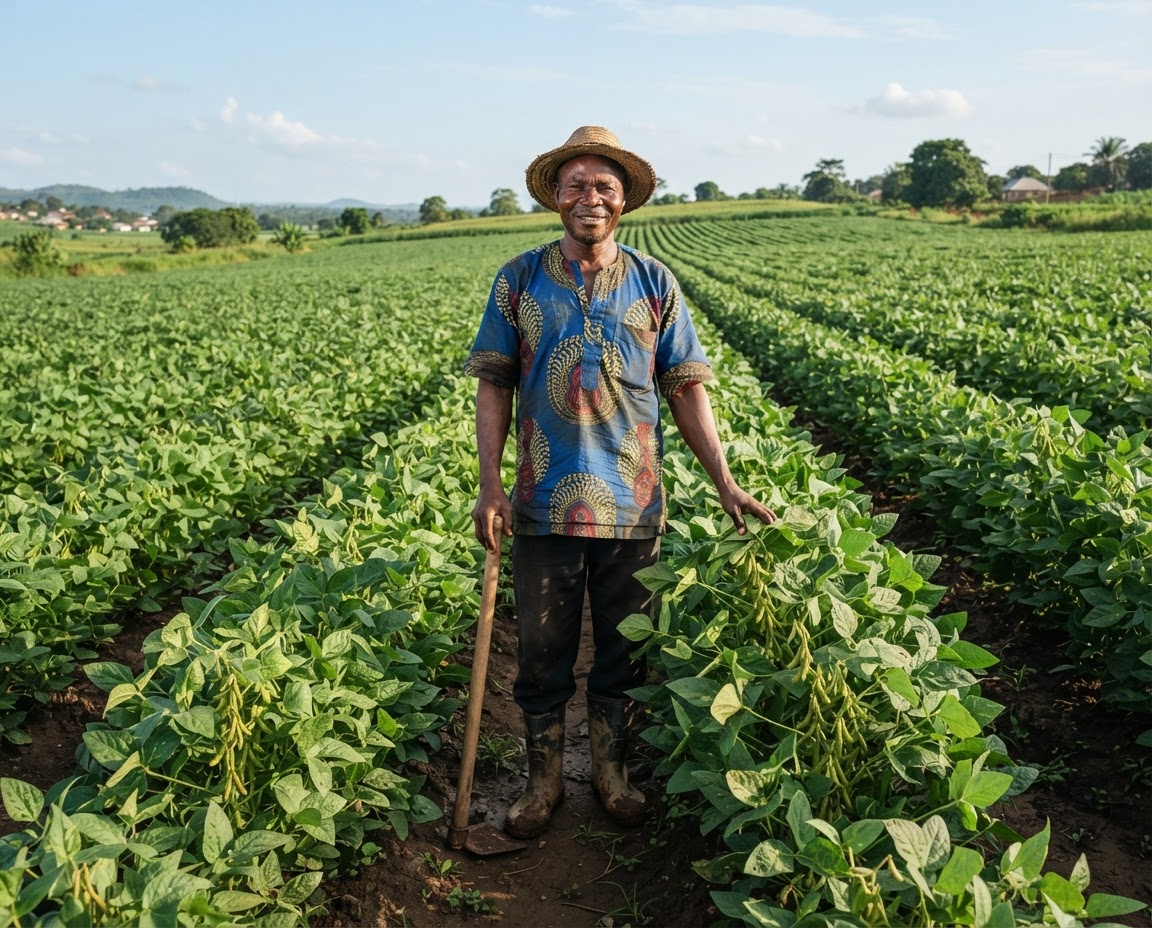
Weeds don’t wait for your crop to grow before they start competing.
Once cowpea or soybean emerges, weeds can quickly begin competing with the crop for water, nutrients, sunlight and space. But when it comes to weed control, timing matters.
Spray too early, and you may not get the result you expect. Spray too late, and weeds may already be well established and competing aggressively with your crop.
So, how do you know when your cowpea or soybean is ready for weed control?
Start With the Crop Stage
The first thing to consider is the growth stage of your crop.
After emergence, cowpea and soybean gradually develop more leaves and establish their canopy. During this early growth period, weeds can compete strongly with the young crop.
However, not every herbicide can be applied at every crop stage. Some products are designed for use before the crop emerges, while others are suitable for application after emergence.
This is why farmers should always check the product label for the recommended crop stage before spraying.
Why Spraying Too Early Can Be a Problem
Spraying too early can mean applying a product outside its recommended timing or before the weeds and crop are at the appropriate stage.
Depending on the herbicide, this may reduce effectiveness or increase the risk of crop injury.
For post-emergence herbicides especially, application timing is important because the product may be designed to work best when weeds are actively growing and still at a susceptible stage.
Earlier is not always better.
Always follow the manufacturer’s recommended timing.
Why Spraying Too Late Can Also Cost You
Waiting too long can give weeds time to become larger and more established.
By then, they may have already taken up valuable water and nutrients and blocked sunlight from reaching your crop.
Large or mature weeds can also be more difficult to control with some herbicides.
This is why farmers should not wait until the field looks completely overgrown before thinking about weed management.
The goal is timely control, not simply late rescue.
Look at the Weeds
The condition of the weeds is another important clue.
Walk through your field and check whether weeds are:
- Newly emerged and actively growing.
- Small and at an early growth stage.
- Becoming established and spreading quickly.
- Already large, mature or producing seeds.
Many weed-control products work best when susceptible weeds are still young and actively growing, but the exact timing depends on the herbicide being used.
Always use the specific product’s label recommendation as your guide.
What About Cowpea?
Cowpea can be particularly vulnerable to weed competition during its early development.
Farmers should monitor the field regularly after emergence and avoid allowing weeds to establish unchecked.
If you are considering herbicide application, confirm that the product is specifically recommended for cowpea and check its instructions for the correct crop and weed stages.
Never assume that a herbicide suitable for another crop is automatically safe for cowpea. Saro Agrosciences offers Buster as a pre-emergence option and Twig as a post-emergence option for cowpea.
What About Soybean?
Soybean also needs good weed management, particularly while the crop is establishing.
As with cowpea, the appropriate weed-control timing depends on the herbicide, the weed species, the crop stage and whether the product is intended for pre-emergence or post-emergence use.
Regular scouting helps farmers identify problems early and make decisions before weeds become difficult to manage. For soybean, Triplex and Buster work as pre-emergence options, while Twig serves as a post-emergence option.
Before You Spray, Check These Five Things
Before reaching for your knapsack sprayer, ask yourself:
- What stage is my crop? Know whether your cowpea or soybean is at the crop stage recommended for the product.
- What weeds are present? Identify the weeds and check their growth stage.
- Is this herbicide recommended for my crop? Never spray a product simply because it worked on another farm or another crop.
- Am I using the correct rate? More product does not mean better control. Follow the recommended dosage.
- Are the weather and field conditions suitable? Wind, rainfall and other conditions can affect herbicide application and performance. Follow the product label for application conditions.
Conclusion
Successful weed control is not about being the first farmer to spray or the farmer who sprays the most. It is about getting the timing right.
Don’t spray too early just because you see the first few weeds. And don’t wait until weeds have taken over your cowpea or soybean field.
Scout your farm. Know your crop stage. Identify your weeds. Choose the right product, and follow the recommended timing and rate.
Don’t spray too early. Don’t spray too late. Spray at the right time.
For more information on good agronomic practices:
Download the FarmPropa App, available on Android and iOS, speak with a trusted SARO agro-dealer, or follow SARO Agrosciences on Facebook, X (Twitter), LinkedIn and Instagram for more practical farming tips.
Leave a Reply