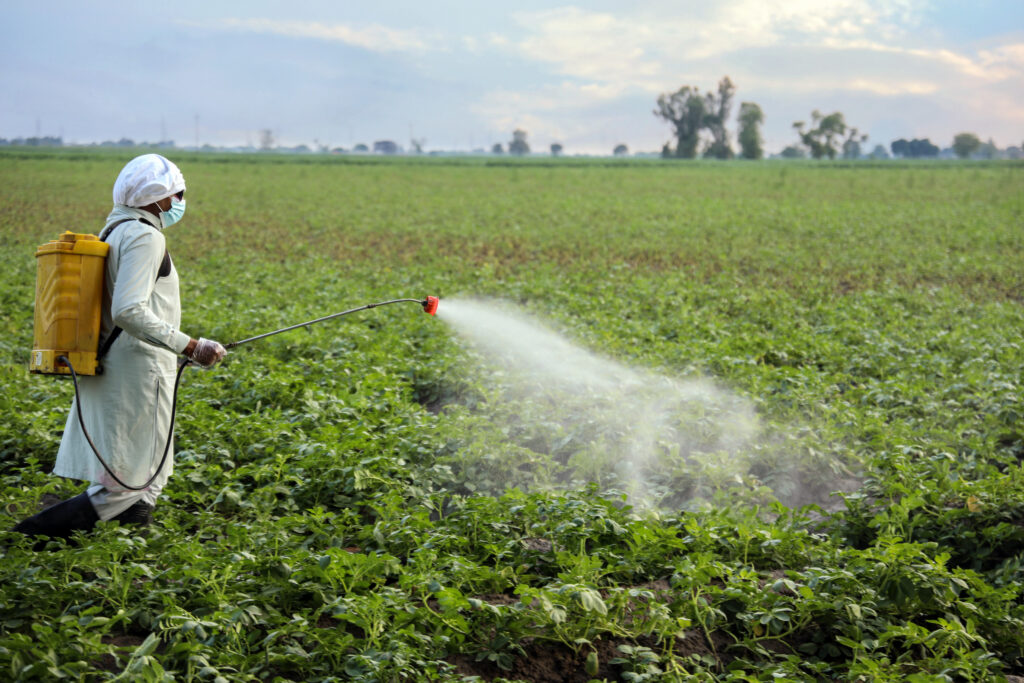
Land clearing is never just another task on the farm; it’s the start of a season, the first step toward a good harvest. But anyone who has tried knows it’s hard work: weeds fight back, roots cling stubbornly to the soil, and timing is everything. That’s why land-clearing herbicides are so valuable. They can save hours of backbreaking labour and make sure the soil is ready for planting.
Yet, over time, myths have grown around them. Stories pass from farmer to farmer, from one season to the next, shaping expectations, and are not always true. Some of these misconceptions lead to wasted chemicals, poor land clearing, or even crops struggling later on.
In this week’s blog, we will be spotlighting those myths, clarifying why they aren’t entirely true, and giving you practical insight so your next land preparation is smooth, efficient, and predictable.
Myth 1: One herbicide works for every plant
Many farmers think that once you spray any herbicide, it will kill everything in sight. But plants and chemicals don’t all respond the same way. Some herbicides travel through the whole plant, attacking roots and shoots, while others only work where they touch.
The reality: Choosing the right type matters. Some herbicides like Glyphosates (Gobara, Gobara SG, Uproot, and Sarosate) go deep, giving thorough control over tough weeds. Others (Glufosinates like Slasher, Slasher Super, and SlashaGold) act better upon touch but may need careful coverage.
Myth 2: Good herbicides produce immediate results
It’s easy to get impatient. Spray today, see a bare field tomorrow, that’s what many expect. But herbicides take time to do their work. Some show effect in just a few days, while others need almost a week to fully act.
The reality: Knowing how fast your herbicide works helps you plan the next steps – whether it’s tilling, planting, or retreating problem spots. Rushing to reapply can waste chemicals, stress plants, and harm the environment. How quickly you see results depends on the herbicide. Glufosinate herbicides (like Slasher, Slasher Super, and SlashaGold) act faster, with visible effects in 3–5 days, while Glyphosate (Gobara, Gobara SG, Uproot, and Sarosate) takes a bit longer, typically 4–7 days to show full results. All in all, no herbicide produces an immediately observable result.
Myth 3: Rain ruins everything
Farmers also worry that a little rain will wash away their herbicide. The truth isn’t so simple. Some herbicides become “rainproof” in a few hours, while others take longer. To avoid wash-off, spray on dry days and make sure no rain is expected for the next few hours.
The reality: Paying attention to weather and how your herbicide behaves can make the difference between a clean field and wasted effort. For instance, Glufosinate herbicides (like Slasher, Slasher Super, and SlashaGold) become rainfast after about 4-6 hours, while Glyphosate (Gobara, Gobara SG, Uproot, and Sarosate) takes roughly about 1-4 hours. In both cases, you have nothing to worry about as long as the specified period is kept.
In conclusion,
Herbicides can make land clearing easier, but only when used with knowledge. Understand how they work, give them time to act, respect the rain, and think about the weeds you’re facing. When you do, land clearing stops being a gamble and becomes a smart, predictable step toward a productive farm.
If you’re looking for trusted solutions, Saro Agrosciences offers a range of herbicides for every need, whether you want something fast-acting or something that goes deep to tackle stubborn weeds. From Slasher and SlashaGold to Gobara and Uproot, there’s a product for every type of land and season. Learning how to choose and use them wisely can save time, reduce effort, and help your farm thrive. That’s why we have the product recommender on the FarmPropa app for you to use.
Land clearing is just the start, make it count with the right herbicide in hand.
Leave a Reply