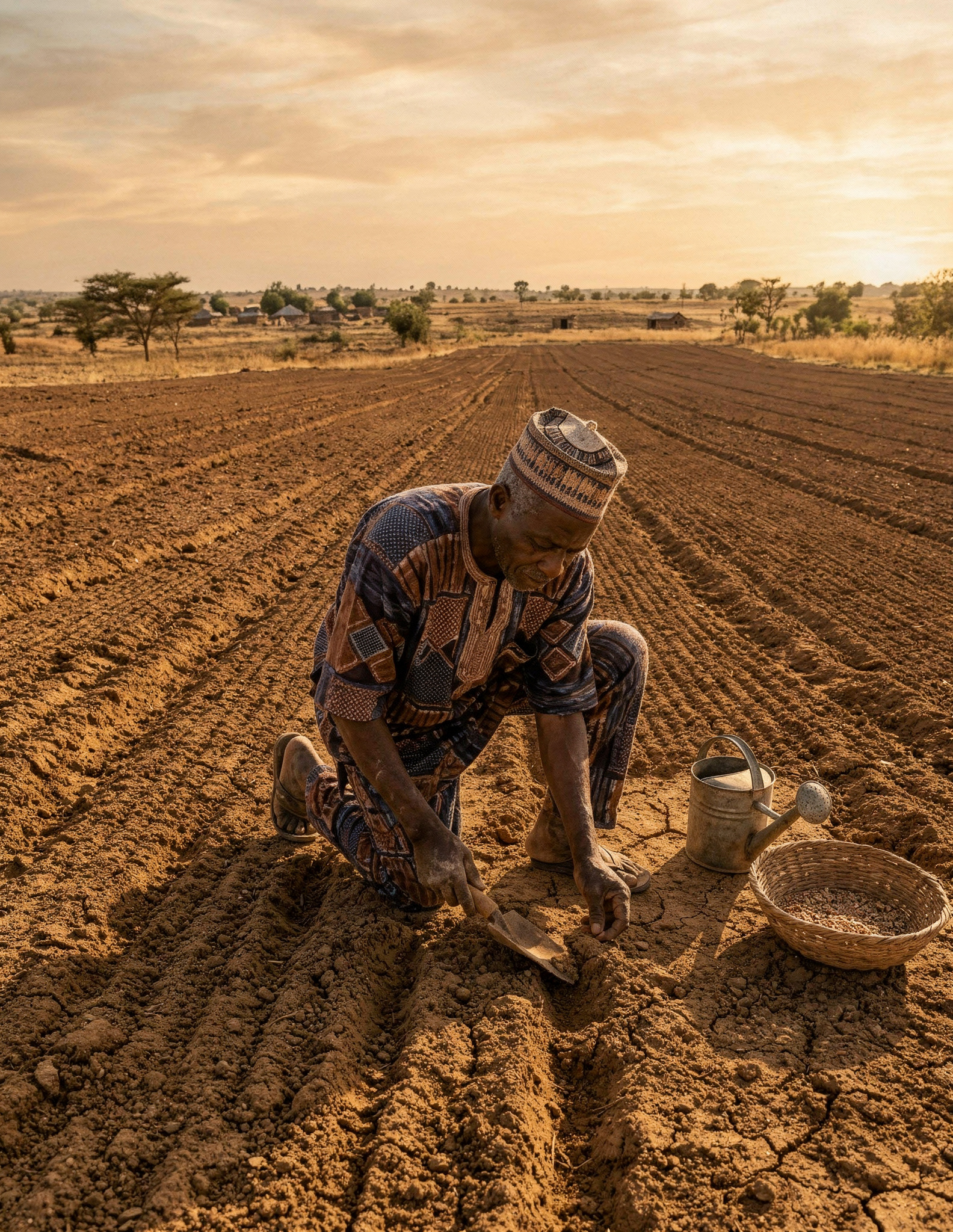
May is not just another month on the calendar. For farmers across Nigeria, the rains are already knocking, and in many places, they have already arrived. If you plant the right crops now, while your neighbours are still planning, you will watch your farm grow.
Don’t let May pass without planting these five crops.
1. Rice
Rice is a staple food in Nigeria. Nearly every home eats rice. That demand means there is always a market for it. May to June is the best time to plant rice, especially in lowland areas where there is good water. Farmers in states like Kebbi, Niger, Anambra, and Cross River do very well with rice during this period.
One acre of rice farm, managed well, can produce over 100 bags. Within 3 to 4 months, your investment starts coming back.
Quick tips for rice:
* Land: Prepare your land well before planting. Clear all weeds and grasses and level the ground.
* Water: Rice needs water — plant it where water stays or flows slowly.
* Fertilizer: Apply fertilizer about two weeks after planting to boost growth.
* Pests: Watch for birds and insects. Check your farm regularly.
A farmer who knows his crop is a farmer who gets paid.
2. Cowpea (Beans)
Beans are serious business in Nigeria. It is cheap to plant, it grows fast, and people buy it all year long. For Northern farmers especially, cowpea is one of the most trusted crops of the season. Cowpea grows very well in the savanna regions of the northern states like Kano, Katsina, Sokoto, Zamfara, and Borno. But it also does well in drier parts of the South.
The good news? Cowpea can be harvested in as little as 60 to 90 days. That means if you plant in May, you could have beans ready by late June to July during a time when the market price is still high.
Quick tips for cowpea:
* Soil: Sandy-loam soil works best. Cowpea does not like too much water.
* Spacing: Plant 60cm by 20cm apart.
Pests: Cowpea attracts insects. Spray at the right time to protect your pods.
* Rotation: Do not plant cowpea in the same spot every year, change it with maize or sorghum.
The wise farmer plants beans in May and smiles in late June to July.
3. Cassava
Cassava is the backbone of many Nigerian homes. Whether it becomes garri, fufu, or eba, people eat it every day. Cassava can survive even when rain is not regular, but it does best when planted between April and June.
One good thing about cassava is that it is not too difficult to grow. Once it is in the ground and the rains are falling, it mostly takes care of itself. Harvest comes between 9 to 12 months.
Both Northern and Southern farmers can grow cassava. It works in many types of soil, as long as the ground drains well and does not stay waterlogged.
Quick tips for cassava:
• Stems: Use healthy, disease-free stems. Bad stems = bad harvest.
• Soil: Well-drained, fertile soil gives the best result.
• Weeding: Weed in the first 3 months so the crop is not choked.
• Spacing: Plant 1 metre by 1 metre apart for good root development.
Cassava is patient. But only the farmer who plants in time gets to harvest.
4. Maize (Corn)
Maize is a crop that almost every Nigerian farmer knows, and for good reason. It grows well in both the North and the South. It is one of the first crops to plant once the rains begin.
In the South, you can start planting maize from April. But if you have not started yet, May is still a very good time. In the North, especially in areas like Kaduna, Kano, and Benue, May is actually the right time to begin, just as the rain is starting to come in.
Maize takes about 3 to 4 months to harvest. Plant it now, and you could be selling or feeding your family by August or September.
Quick tips for maize:
● Soil: Maize loves loose, deep soil. Avoid land that holds too much water.
● Spacing: Plant 75cm between rows and 50cm between stands.
● Weeding: Weed early at 2 weeks and again at 4–5 weeks after planting.
● Herbicide: Use a pre-emergence herbicide right after planting to stop weeds before they start.
5. Groundnut
Groundnut is one of the most valuable crops in Northern Nigeria. It is a cash crop, a food crop, and it even helps your soil by adding nutrients back into the ground after harvest. May is the right time to plant groundnut, especially in the North. States like Kano, Kaduna, Jigawa, and Gombe have the right kind of sandy soil that groundnut loves.
Groundnut takes about 3 to 5 months to harvest. You can sell the raw nuts, the oil, or the cake, there is always a buyer. And because it improves the soil, whatever you plant there next season will do even better.
Quick tips for groundnut:
• Soil: Sandy, well-drained soil is best. Avoid heavy clay.
• Planting: Plant as soon as the first rains come and the soil is moist.
• Weeding: Weed at 3 and 6 weeks after planting.
• Harvest: When the leaves start turning yellow, it is almost time — dig carefully so you do not break the pods.
Groundnut feeds the family, pays the school fees, and improves the farm. That is three wins in one crop. Before You Plant, Get the Right Information. Every crop on this list can give you a good harvest this season. But the difference between a good harvest and a great harvest is information.
What fertilizer should you use? When should you spray? What seed variety works in your area? These are questions that can save you money and increase your yield.
Use the FarmPropa app to get planting guides, tips, and advice that match your location and your crop. FarmPropa is available on Android and iOS.
Leave a Reply